Héritage Saint-Bernard is discontinuing bird feeding at the Refuge Faunique Marguerite-D'Youville and Centre écologique Fernand-Séguin.
Adapting feeding practices: a response to our changing reality
In recent years, visitor traffic at sites managed by Héritage Saint-Bernard has increased significantly. This popularity reflects the public’s newfound attachment to these environments, but it also presents new challenges in terms of wildlife and ecosystem conservation, as well as visitor safety. To address this new reality, the organization has decided to no longer allow visitors to feed the birds and to remove the feeders currently in place at these sites.
The significant increase in visitor traffic has made it difficult to manage feeding. The amount of seed distributed to the birds has become excessive, leading, among other things, to the birds becoming overly accustomed to feeding and developing persistent and aggressive behaviors toward visitors. It is also causing food to accumulate on the ground, attracting species which were not supposed to be fed by visitors.
In well-preserved natural habitats, such as the ones managed by Héritage Saint-Bernard, enough food is available in the wild for animals to feed themselves.
The discontinuation of bird feeding is intended to maintain the animals’ natural behaviors, preserve their health, and reduce the risk of problematic interactions with humans. It is in line with recognized best practices in wildlife conservation.
Le ministère de l’Environnement, de la Lutte contre les changements climatiques, de la Faune et des Parcs recommande d’ailleurs d’éviter tout nourrissage des animaux sauvages. Plus d’info sur leur page Nourrir les animaux sauvages : un geste à éviter | Gouvernement du Québec
Safety first
A wild animal, even if it seems tame, remains unpredictable. Feeding can encourage aggressive behavior, particularly in certain territorial species. Getting too close also carries the risk of bites, scratches, and other defensive reactions.
Vigilance is all the more important as cases of rabies, a disease which can be transmitted through bites and scratches, have recently been reported in the region. Observing without feeding helps reduce risk, all the while encouraging a healthier and more respectful relationship between visitors and the wildlife.
These measures all share the same goals: to protect wildlife, prevent conflicts, and ensure visitor safety.
This initiative will be implemented in phases, leading to a complete cessation of feeding by the end of 2026 at theRefuge Faunique Marguerite-D'Youville and Centre écologique Fernand-Séguin.
Currently, seeds are sold on site, and visitors may also bring their own, provided they are suitable. However, despite these guidelines, numerous violations are observed on the ground: distribution of unsuitable food (bread, vegetables, cakes, salted nuts, etc.), feeding of mammals such as deer, raccoons, and squirrels, as well as large amounts of food left along the trails.
Given the inability to properly control feeding and in light of the increase in aggressive wildlife behavior reported to our teams by visitors, the decision was made to prohibit the feeding of all wild animals, including birds, at all natural sites managed by the organization.
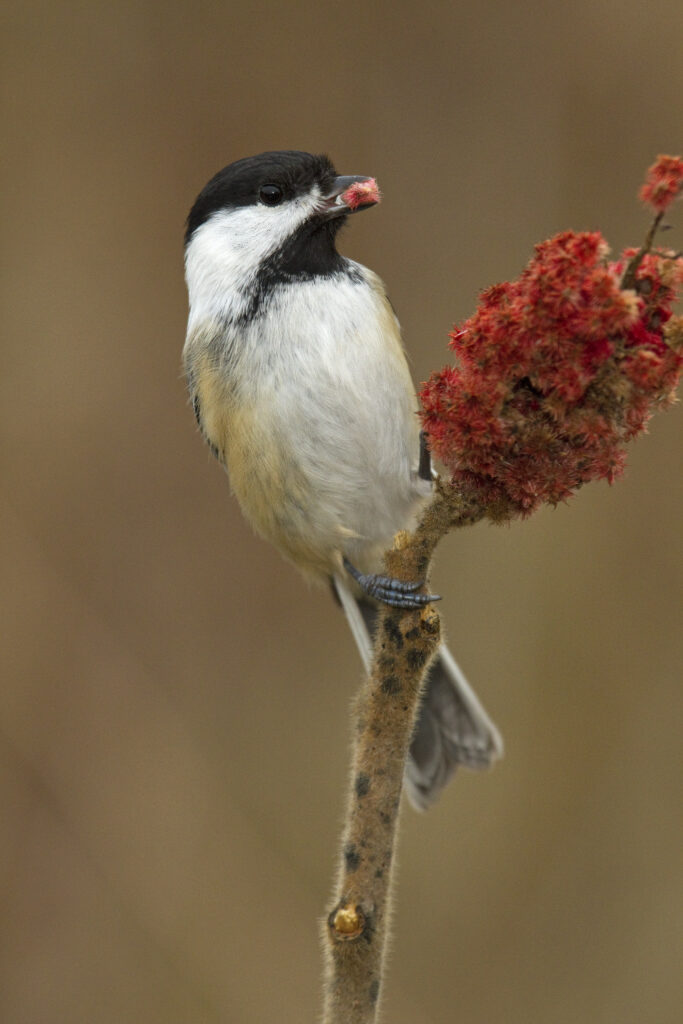
A fresh and more authentic viewing experience
The changes we’re making to our feeding practices are part of a larger commitment to offering visitors a more enriching wildlife viewing experience, without taking away an activity they enjoy. Rather, this is a positive transformation of the experience, focused on respecting the animals’ natural behaviors and providing a more authentic view of wildlife.
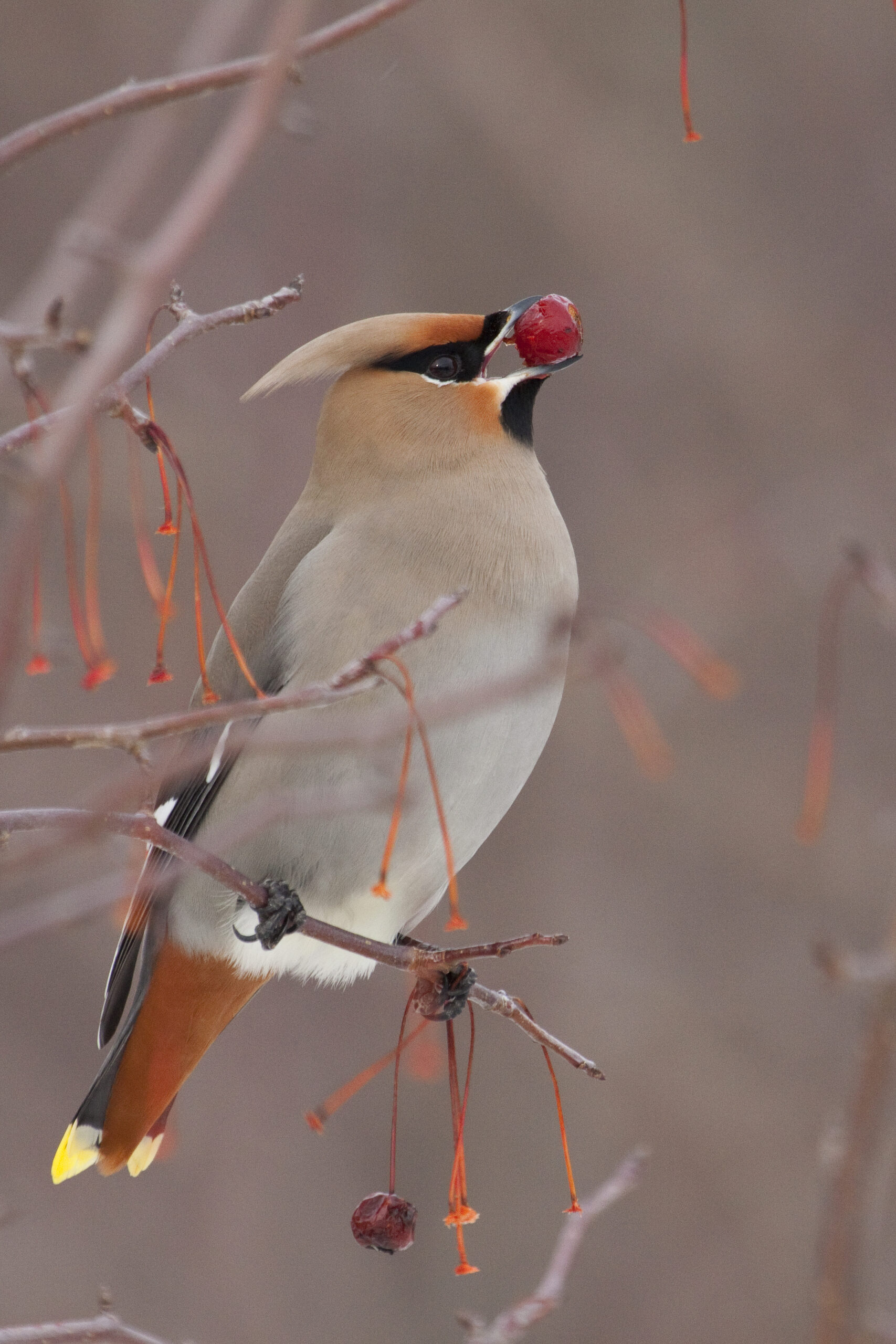
Without feeding, birds retain more of their instinctive behaviors such as foraging, social interactions, choosing where to perch, and moving naturally within their habitat.
For both amateur ornithologists and birdwatching enthusiasts, this approach offers a more authentic experience, allowing them to observe birds as they truly are, in an environment less influenced by human presence. Watching a bird behave freely in its natural habitat becomes a unique opportunity for learning, contemplation, and connection with nature.
By promoting observation without feeding, Héritage Saint-Bernard aims to foster a more respectful relationship with wildlife, while offering educational and engaging experiences. This approach highlights the richness and diversity of natural behaviors, contributing to a visit that is memorable, inspiring, and aligned with best conservation practices.
Observing wildlife differently
The removal of bird feeders and the cessation of feeding encourages more natural encounters with the fauna.
Without concentrated feeding stations, birds are more widely dispersed throughout the area. This encourages more attentive observation: look up, slow your pace, and scan the trees, shrubs, and undergrowth. It’s the perfect opportunity to discover less visible species that don’t frequent feeders but are an integral part of the area’s biodiversity.
This approach also allows us to observe natural behaviors: foraging, movement, interactions between individuals, and habitat selection. These authentic scenes provide a deeper understanding of the avian world.
Observing without feeding the animals also means learning to listen to nature. The sound of birdsong becomes a valuable guide: it directs your gaze, reveals a quiet presence, and enriches the hiking experience. By listening closely, you develop a different way of seeing… through listening.
This new way of observing does not detract from the experience; rather, it enriches it by fostering curiosity, patience, and a sense of wonder in the face of nature that is alive, free, and in balance.
Once the project is complete, what will change for visitors?
The sale of sunflower seeds has been suspended at the Refuge Faunique Marguerite-D'Youville and Centre écologique
Fernand-Séguin.
The feeding of birds (in your hands, on the ground or in feeders) is no longer allowed on site.
The refilling of bird feeders will gradually reduce, then be permanently stopped, and the feeders will be removed.
Observation of wildlife remains not only possible, but encouraged,with emphasis on respecting it and its habitats.
Each visitor serves an important role. Through respect for these new guidelines, you contribute directly the well-being and safety of the wildlife, as well as your own.
Observing wildlife differently : other positive alternatives
Stopping feeding wildlife doesn’t mean you stop loving or observing it; it just means doing it differently.
Here are some ways of doing so :
- Observe from a distance, with or without binoculars, by staying on the trail.
- Observe quietly and without direct interactions by listening to bird songs.
- Photograph wildlife without bait and without disturbance.
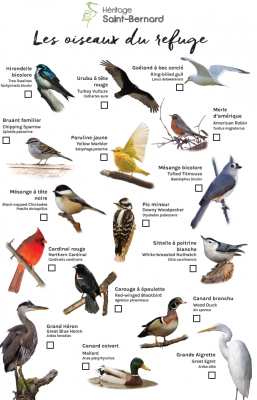
Download an identification sheet for birds that can be found in the Refuge Faunique Marguerite-D'Youville and Centre écologique Fernand-Séguin.
Thank you for being part of the solution
Héritage Saint-Bernard sincerely thanks everyone who, through their actions and understanding, helps preserve vibrant, balanced, and accessible natural environments
Q&A
Pourquoi Héritage Saint-Bernard met-il fin au nourrissage des animaux sauvages?
L’organisme doit s’adapter à une nouvelle réalité : le nourrissage des oiseaux précédemment autorisé devient trop compliqué à gérer dû à l’augmentation de l’achalandage sur ces sites naturels.
Même si l’intention est bienveillante, il est impossible de contrôler la qualité et le type de nourriture distribuée. Certains aliments peuvent nuire à la santé des animaux. Le nourrissage excessif peut également accroître les risques d’accoutumance et d’agressivité des animaux.
Sera-t-il encore possible d’acheter des graines lors de ma visite?
Non. À compter du samedi 6 juin, la vente de graines sera officiellement interrompue au refuge faunique Marguerite-D’Youville et au centre écologique Fernand-Seguin.
Sera-t-il encore possible d’apporter des graines pour nourrir les petits oiseaux?
Non. Il ne sera plus permis d’apporter des graines ni aucun autre aliment pour nourrir les animaux sauvages, y compris les petits oiseaux.
Pourtant, nourrir les oiseaux en hiver, n’est-ce pas une bonne chose?
Les oiseaux qui passent l’hiver au Québec trouvent leur nourriture dans la nature, même en hiver. Ce que nous donnions ne représentait qu’un complément pour eux. Ils n’ont pas besoin d’un contact avec les humains pour survivre, et il est préférable de les observer sans intervenir.
Est-ce que les animaux vont manquer de nourriture après le retrait des mangeoires?
Non. Les sites d’Héritage Saint-Bernard offrent des habitats riches et diversifiés. Le retrait progressif permet aux animaux de retrouver leurs comportements naturels sans rupture brutale.
Pourquoi retirer les mangeoires si les visiteurs aiment observer et photographier les oiseaux?
Parce que l’observation demeure possible et même plus authentique sans nourrissage. Les mangeoires concentrent artificiellement les animaux, augmentent les conflits entre espèces et les propagations de maladies.
Est-ce dangereux pour les visiteurs de nourrir les animaux?
Oui. Un animal sauvage reste imprévisible. Le nourrissage favorise l’habituation et peut entraîner des comportements territoriaux ou agressifs.
Est-ce interdit ailleurs?
Oui. Le nourrissage est interdit dans les parcs nationaux de la Sépaq et dans les Parcs Canada. Ces mesures visent la protection de la faune et la sécurité du public.
À partir de quand le nourrissage est-il interdit au refuge faunique Marguerite-D’Youville et au centre écologique Fernand-Seguin?
L’interdiction sera appliquée à partir du 6 juillet 2026.
Que se passe-t-il si quelqu’un nourrit quand même les animaux?
Dans un premier temps, les interventions seront éducatives. En cas de non-respect répété, des mesures restrictives pourraient s’appliquer, conformément aux règlements en vigueur.
Comment puis-je observer la faune autrement?
En gardant vos distances, en utilisant des jumelles, en observant les comportements naturels et en participant aux activités d’interprétation proposées sur les sites.
Comment puis-je aider concrètement?
En respectant les consignes, en expliquant la démarche à vos proches et en devenant un ambassadeur de la protection de la faune.
Social networks
Contact us
Île Saint-Bernard
480, boulevard D’Youville
Châteauguay, Québec J6J 5T9
Phone number: 450 698-3133
E-mail: info@heritagestbernard.qc.ca